01
Connected customer records
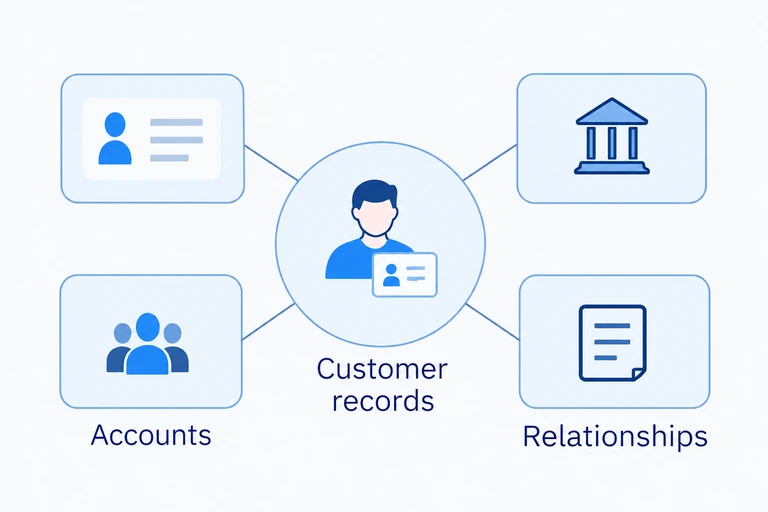
Maintain individuals, businesses, associations and correspondent banks with visibility into their relevant accounts and relationships.

Core banking for commercial banks serving corporate and retail customers.
Built on BX-CBP, the suite connects customer records, transactions and accounting across domains including deposits, lending and trade finance. Product management and application tooling support the core, with interfaces to the systems the bank retains.
Maintain individuals, businesses, associations and correspondent banks with visibility into their relevant accounts and relationships.
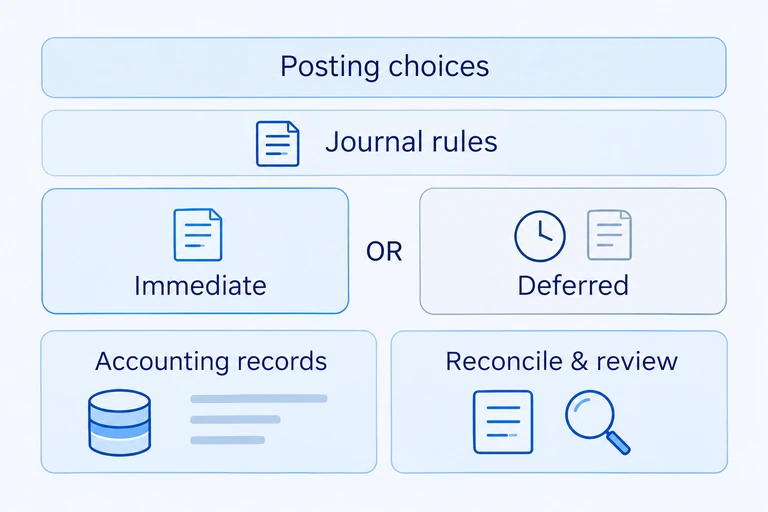
Apply journal-entry rules to business transactions, with immediate or deferred posting as defined by the process. Reconciliation and pre-close checks support daily accounting work.
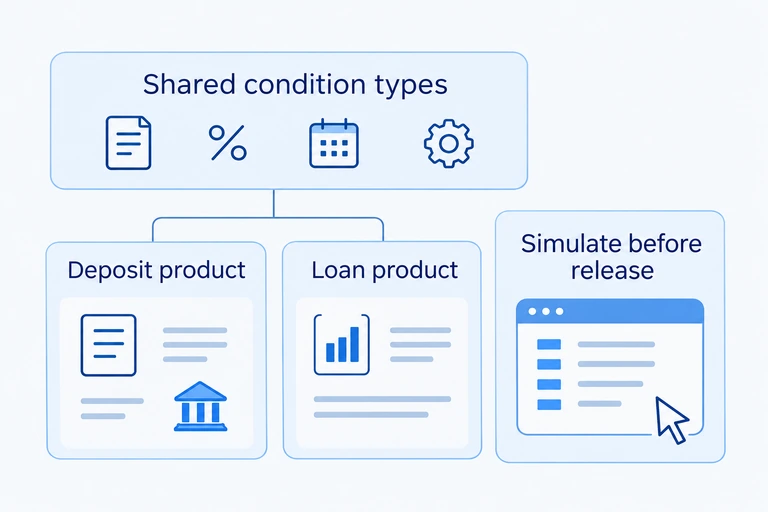
Use BX-PF to manage supported deposit and lending conditions, rates and fees, with simulation before changes are released.
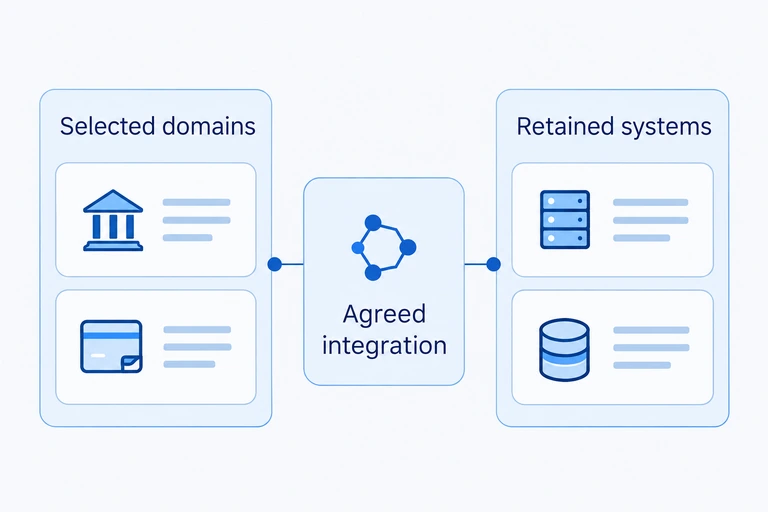
Introduce agreed business domains and connect retained systems through BX-I or an agreed integration product.
Function availability, interfaces and implementation scope are confirmed for the selected product version and institution. External services, local network connections and additional development are agreed separately.
Onboards individuals, sole proprietors, corporations, corporate entities, associations and correspondent banks, each with its required identification and documents.
One record shows a customer’s deposit, loan and FX balances, transactions, contacts and benefits on one screen.
Create, change, query, verify and terminate customer records through the same services from any channel.
Classifies customers by segment and holds a rating that pricing, limits and approval rules can reference.
Real-name verification and KYC at onboarding and on change, with an AML risk rating driving transaction restrictions and approvals.
Contact points are routed per service with change history, so notifications reach the address the customer chose.
Records the consents and authorisations a customer has given and applies them when data is used or shared.
One party holds Customer, Business Partner and Employee roles at once without duplicate records.
Blocks onboarding or contact for listed parties, with the reason and period recorded.
Staff see the customer fields and actions their role permits.
Opens, closes and terminates accounts early, applying the product’s early-termination interest and fee rules.
Posts deposits and withdrawals, handles counter cash, and pays interest on the product’s schedule.
Maintains attributes, transfers accounts between branches, sets inactive accounts dormant, and applies holds and freezes.
Runs time deposits, demand accounts and installment savings on the same services, with conditions held in the product.
Accrues interest daily, simulates it before a transaction, and composes the rate from a base plus preferential components.
Keeps available, actual and frozen balances separately, so holds and pending items never alter the ledger balance.
Issues deposit certificates, balance certificates, withholding-tax certificates and account statements.
Processes maturities and rolls over time deposits automatically under the account’s instruction.
Application, approval, disbursement, repayment and closure run on one loan record.
Property-secured lending with the collateral recorded against the loan.
Loans secured by collateral or by a pledged deposit certificate held at the bank.
Loans supported by a third-party guarantee, with the guarantee recorded and tracked.
Vehicle finance and lease contracts as loan product lines.
Disbursements, repayments, interest and fees post to accounting under journal-entry rules.
Trade finance for corporate customers, on the same customer and accounting base as deposits and loans.
Outward and inward international remittance.
Support the agreed trade, remittance or FX message flows. SWIFT message types, standards versions and external connectivity are confirmed during implementation.
Foreign exchange dealing for the bank’s own position.
Money market placements and borrowings.
Treasury funds transfers between the bank’s accounts and counterparties.
Securities positions held by treasury.
One-off transfers, intrabank automatic transfers, and cross-bank bulk transfers for giro, cash management and payroll. Cross-bank interfaces and batch-linked automatic or scheduled transfers require site-specific implementation.
Transfers to a contact rather than an account number, with 1/N split, unclaimed handling and expiry.
Scheduled transfers run in the Center-Cut day-end batch, with each item’s result recorded. Cross-bank interfaces and batch-linked automatic or scheduled transfers require site-specific implementation.
Issues virtual account numbers per purpose, such as a collection or merchant, routing funds to the underlying account.
Customers set their own limits by channel and transfer type within the bank’s ceilings.
Alerts on transactions, delayed transfer for high-value payments, and device binding for the channels a customer uses.
Post payment transactions to accounting under the applicable journal-entry and processing rules.
Collects missed or failed items in asynchronous, parallel runs without blocking online processing.
Transactions post in real time; items awaiting a later event post on a deferred basis.
A multi-entity, multi-level chart of accounts with parent-child aggregation.
Rules on product, amount type and account generate journal entries, within the supported posting model.
Authorised staff post manual entries; financial statements are produced from the ledger.
Reconciles the business ledger, off-balance items and the general ledger and reports differences.
Each settlement step is validated, its status tracked, and a failed step can be re-executed.
Records off-balance transactions and clears positions between branches.
Parks unmatched items in suspense accounts and tracks them to clearance.
Opens the business day, validates outstanding items before close, and closes the day.
Cash, general ledger, journal, manual entry, balance verification, internal accounts and inter-branch accounts.
Business staff launch and maintain products in the Configurator within supported configuration.
Rates, fees and conditions are configured per product and simulated before launch, independent of any account.
Release supported product definitions to agreed channels, with changes tracked and validated before release.
The same product is classified from risk, compliance, seller, buyer and finance views.
Maintain a product catalogue for the agreed comparison and management scope. AI-assisted entry is included only where supported in the selected product version.
Fees are managed in one place and simulated for what-if cases before a change goes live.
Single or multi-level approval with amount thresholds and timeout escalation.
Asynchronous tasks are monitored, rejection reasons tracked, and rejected items resubmitted.
Generates statements, contracts and certificates, and records inbound documents.
Account, contract and document numbers are generated from 13+ configurable patterns.
A 30-year business-day and holiday calendar drives value dates, maturities and batch schedules.
Restrictions by Actor, Customer or Contract, applied per channel.
A unified notification API with 25+ content types, multi-language content, and shared common codes.
Organisation units, employees and permissions with 7-dimension access control.
Serve branch operations through Teller and connect additional channels through APIs.
Tools for in-person teller servicing: cash handling, account transactions, document issuance and approvals.
Connect additional channels, such as mobile or agent channels, to core banking services through APIs.
Tell us which banking domains you plan to introduce or modernise, which systems will remain, and your integration, accounting and deployment requirements.